

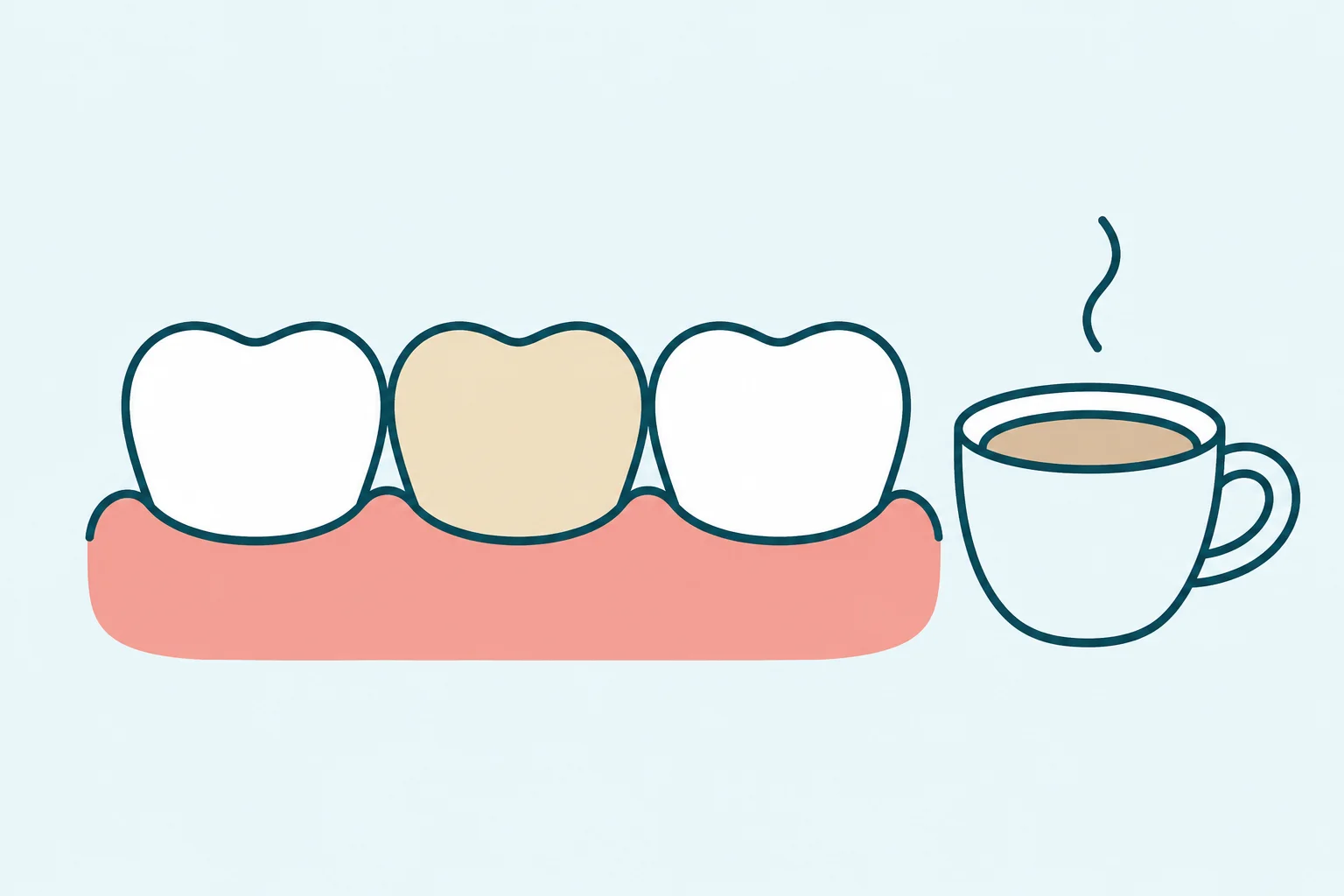
Teeth turn yellow for three main reasons
The first is surface staining: kopi, teh tarik, red wine, curry, soy sauce, cigarettes. Pigments from all of these build up on the tooth surface and on tartar, little by little over the years. This is the most common cause, and the easiest to fix.
The second is internal discolouration: over the years, pigment molecules soak into the enamel itself, where no toothbrush can reach them. If your teeth look uniformly yellowish rather than patchy, this is usually why.
The third is simply age: enamel is a semi-translucent off-white layer, and the dentine underneath it is naturally yellow. Enamel thins gradually with age, letting more of that yellow show through. Teeth getting yellower over the decades is normal; it does not mean you have been brushing badly.
One situation deserves special attention: a single tooth turning grey or dark, often after an old knock or when the nerve inside has died. That is not a whitening problem; have it examined first.
Why are my teeth still yellow when I brush every day?
Because brushing removes plaque and food debris. It cannot remove pigment that has soaked into the enamel, and it certainly cannot change the natural colour of your dentine. In other words, yellow teeth are not the same as dirty teeth. Some people have naturally yellowish teeth that are perfectly healthy; others have white teeth full of cavities. Colour and health are two different things.
Does whitening toothpaste work?
Only up to a point. Whitening toothpastes use mild abrasives to scrub fresh stains off the surface. They can slow down how quickly a coffee drinker’s teeth darken, but they cannot turn yellow teeth white, because they do nothing about the colour inside the tooth. Be careful with the harsher ones: heavily abrasive pastes wear enamel down over time, and thinner enamel shows more of the yellow dentine underneath, so aggressive scrubbing can actually make teeth look yellower.
What about baking soda, lemon juice and oil pulling?
The honest answer: lemon juice damages teeth. Acid softens and dissolves enamel: teeth may look brighter for a week or two, then end up more yellow and more sensitive for good. Baking soda works the same way as whitening toothpaste (abrasion), so it only touches surface stains and wears enamel with daily use. Coconut oil pulling has no reliable evidence behind it as a whitening method. A simple rule of thumb: any remedy promising “white teeth in a week” is either doing nothing or damaging your enamel.
So what actually works?
It depends on which kind of yellowing you have:
- Stains mostly on the surface (tea, cigarettes, tartar): a single scaling and polishing often brightens more than you expect, at a fraction of the cost of whitening. We always check this first.
- Uniformly yellowish teeth you want brighter: professional teeth whitening uses a regulated-concentration gel to break down the pigment inside the enamel, with your gums protected and a dentist supervising. It is the only non-invasive way to change the colour inside the tooth.
- A single grey tooth, or front teeth with multiple fillings: whitening gel cannot change the colour of filling material and struggles with greyish tones; a veneer is usually the better answer.
When should you see a dentist about it?
If a single tooth has darkened, if the yellowing comes with sensitivity or pain, or if you simply are not sure which category you fall into, come in for a check-up. At Happy Tooth Dental Clinic in Puchong, we will tell you honestly whether a scaling is all you need, whether whitening is worth it, or whether you need neither. Whitening over decay or tartar wastes your money and harms your teeth.