
Braces & Aligners
Straightening teeth is a marathon with a clear finish line, and it's easier to live with than most people expect.
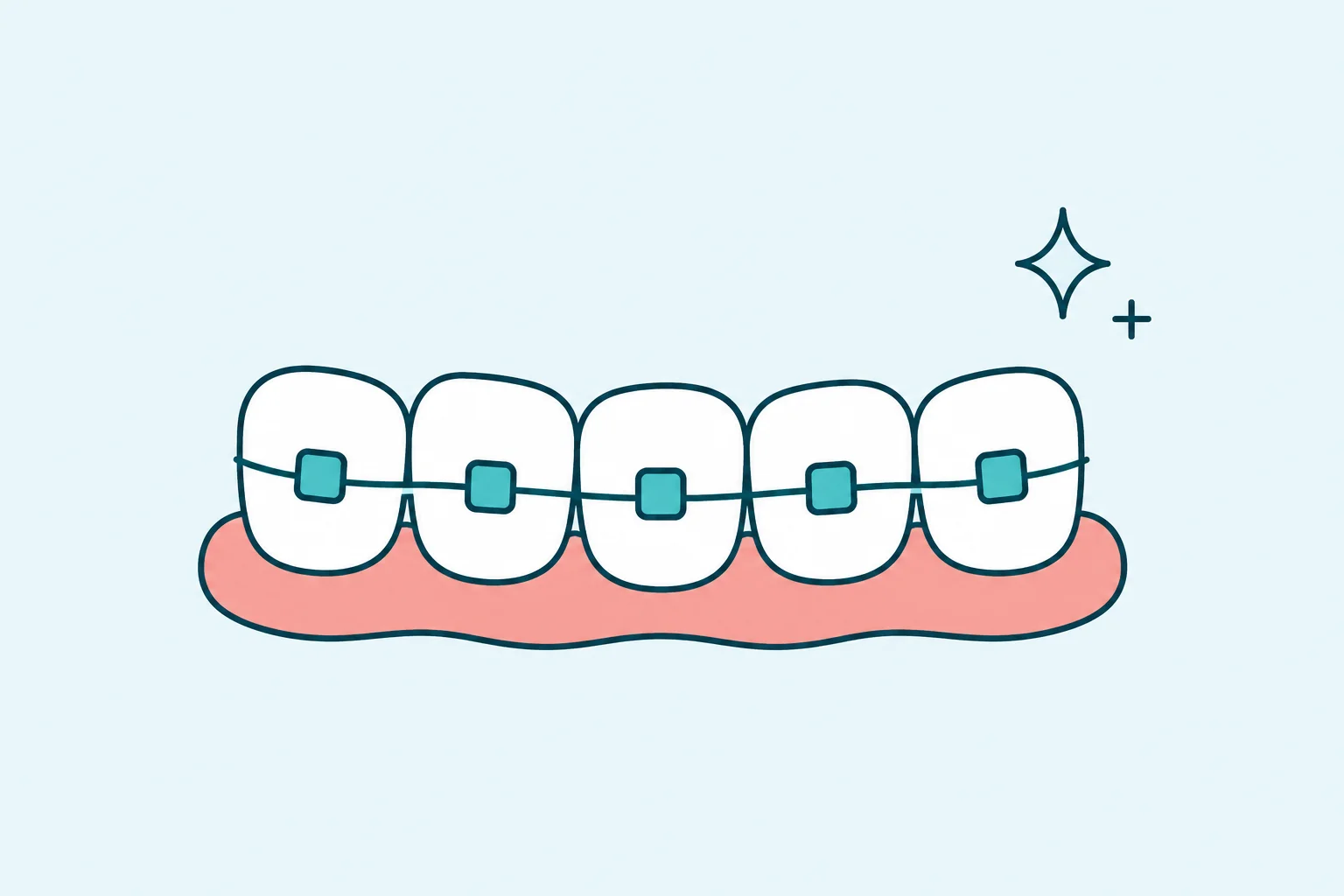
When orthodontics is worth it, and when it can wait
Braces or aligners are usually right when…
- Crowded or overlapping teeth make cleaning difficult
- Gaps, protruding teeth or a misaligned bite bother you
- Your bite wears certain teeth faster than others
- You're an adult who never had the chance; it is genuinely not too late
…but straightening is not always the first move
Teeth and gums must be healthy before they are moved; untreated decay or gum disease has to be settled first. That is a question of order, not a rejection.
Start with: Dental Check-up →If your concern is a single slightly rotated or chipped front tooth, a veneer can sometimes deliver the visual result in weeks instead of months, so it is worth an honest comparison.
Compare: Veneers →Our promise: At the consultation, we will tell you whether treatment is genuinely needed, which option fits your case, and the realistic timeline, all before you commit to anything.
Braces and clear aligners, plainly explained
Both do the same fundamental thing: apply gentle, continuous pressure that guides teeth into better positions, while the bone around them remodels to hold the new arrangement. Braces do this with brackets and wires fixed to the teeth, adjusted at each visit. Clear aligners (Invisalign is the best-known brand, and the system we mainly use) do it with a series of transparent, removable trays, each one a small step ahead of your current tooth positions, swapped every week or two.
Neither is universally “better”: braces work every hour of every day regardless of willpower and handle complex bite corrections; aligners are nearly invisible and removable for eating and brushing, but only work while worn. The right answer depends on your teeth first and your lifestyle second.
More than straight: why alignment matters
Well-aligned teeth are easier to clean (crowded overlaps are where floss struggles and cavities begin), wear more evenly, and load the jaw joints more comfortably. The cosmetic result is real and worth wanting, but the easier cleaning is what pays off for decades.
The adult question
The largest growing group in orthodontics is adults, often people who wanted treatment at fifteen and are finally doing it at thirty-five. Teeth move at any age. At Happy Tooth Dental Clinic in Puchong, the consultation will give you an honest picture: whether treatment is needed at all, which option fits, how long, and what it costs, all decided before anything starts rather than along the way.
Nothing unknown, nothing to fear
Records first
Photos, a scan and an X-ray map where each tooth is and where it should go. Nothing is decided blind.
Fitting day
Brackets are bonded on (or your first aligners handed over). No needles and no drilling; the strangest part is your tongue exploring everything for a few days.
The rhythm
Short visits every 4–8 weeks to adjust wires or collect new aligner sets. Teeth feel tight and tender for 2–3 days after each change; the pressure is a sign of progress.
The finish
Braces come off (a genuinely great day), and retainers take over to hold the new positions while bone settles around them.
Will it hurt? Orthodontics doesn't hurt the way people fear: there are no injections and no drilling. What it does involve: a few days of dull tightness after each adjustment, managed with soft food and an ordinary painkiller, and an occasional rubbing spot that orthodontic wax settles. Discomfort peaks on day two and fades by day three or four.
- DoEat softer food for a couple of days
- DoUse orthodontic wax on any bracket that rubs
- Don'tPlan your favourite crunchy meal for adjustment day
- DoBrush after every meal: around each bracket, or after removing aligners
- DoWear aligners 20–22 hours a day; they only work while they are in
- Don'tBite whole apples, hard nuts, ice, or sticky sweets with braces on
- DoWear your retainers exactly as advised; they are what makes the result permanent
- Don'tAssume teeth are 'done': without retainers, teeth drift back toward where they started
Call us if: a bracket comes loose, a wire pokes and wax does not settle it, or an aligner cracks or is lost. None of these are emergencies, but a quick WhatsApp lets us slot you in and keep the plan on schedule.
Teeth move gradually: expect visible change within months and the full result across the planned timeline. After braces come off, retainers hold everything while the bone firms up around the new positions; nighttime retainer wear is the long-term insurance on everything you invested.
What determines the fee
- Braces or clear aligners — aligners typically cost more; braces handle certain complex movements better, and suitability comes first
- Complexity of movement — mild crowding finishes faster than bite correction; the timeline drives the fee
- Everything included, stated upfront — adjustments, retainers and reviews are quoted as a complete plan, not discovered along the way
No surprises — that's the rule
You will get the exact fee after examination, before any treatment starts.

“Adults always ask me if it's too late for braces. Teeth move at any age; I've straightened teeth for patients in their fifties. The only real difference from treating a teenager is that adults wear their retainers better.”
Dr. Ong Xin Min · Founder, Happy Tooth Dental
Frequently asked questions
Braces or clear aligners: which should I choose?
It depends on your case before your preference: aligners excel at mild-to-moderate crowding and are nearly invisible, but they demand 20+ hours of daily discipline; braces work around the clock and handle complex movements. The consultation will tell you which options genuinely fit.
Do you offer Invisalign?
Yes — Invisalign is the main clear aligner system at our Puchong clinic, with other brands available on request. Whether aligners are the right choice for your teeth is decided at the consultation: they suit mild-to-moderate crowding well, while some complex movements are still handled better with braces.
Am I too old for orthodontic treatment?
No. Teeth move at any age as long as gums and bone are healthy. A growing number of our orthodontic patients are working adults; aligners in particular fit invisibly into professional life.
Will braces affect how I speak or eat?
The first week involves some lisping and careful chewing while you adapt; after that it fades into the background. Aligner wearers speak normally within a day or two; they remove them entirely for meals.
How long will I need to wear retainers?
Full-time for a short period after treatment, then nights only, ideally indefinitely. Teeth tend to drift back over time; the retainer is what makes your result permanent rather than temporary.
Not sure what your tooth needs?
Book a consultation on WhatsApp — your dentist will examine first and explain your options honestly before anything is decided.
Book a consultation