
Veneers
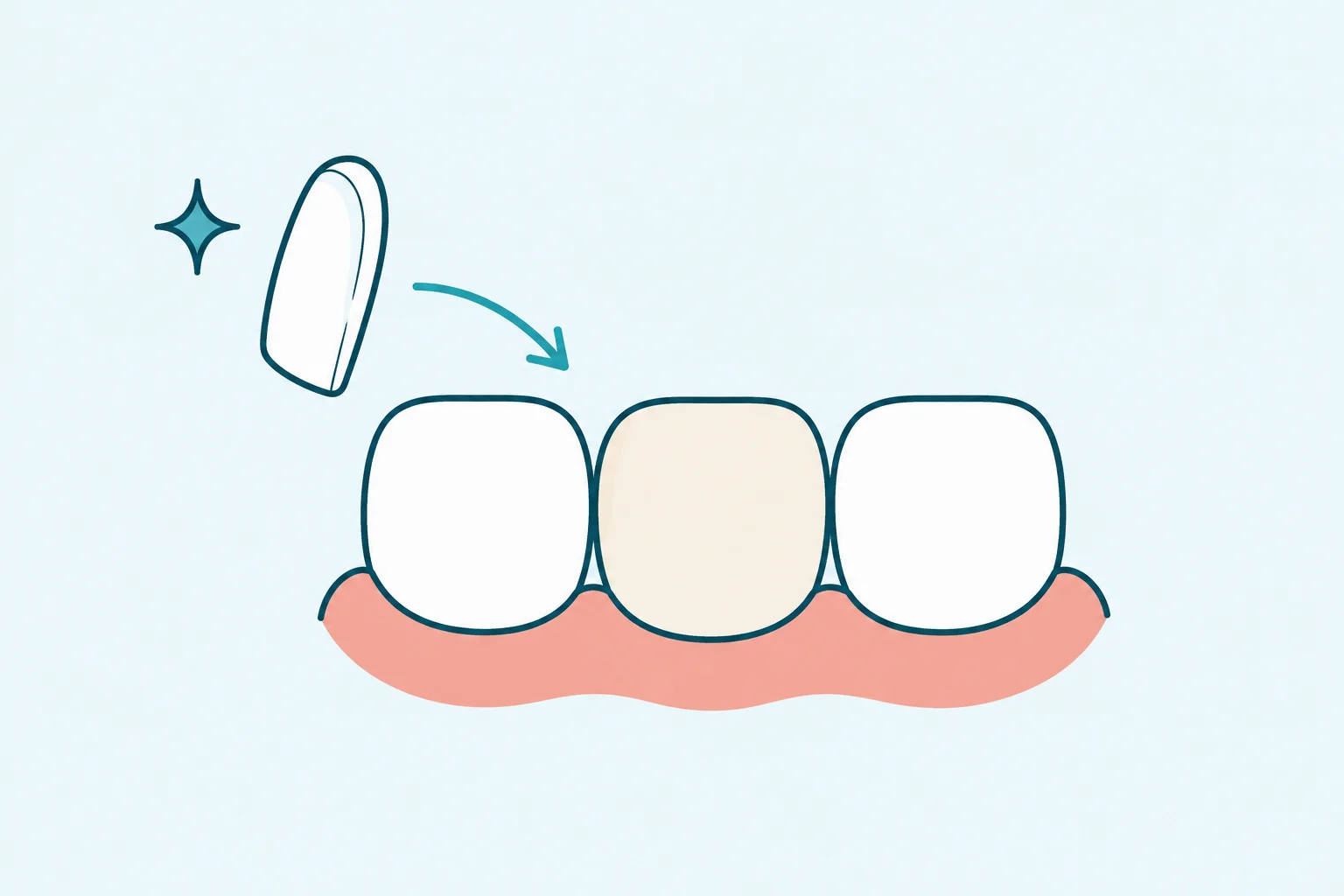
A thin ceramic layer bonded to the front of a tooth, changing colour and shape while keeping the tooth underneath.
When veneers are the right choice, and when something simpler does the job
Veneers are usually right when…
- A front tooth is discoloured in a way whitening can't lift (e.g. after root canal, or tetracycline staining)
- Front teeth are chipped, worn or slightly uneven in shape
- Small gaps between front teeth bother you
- You want a lasting colour change, not one that needs topping up
…but a veneer should never be the lazy answer
If overall brightness is the only concern and your teeth are healthy, whitening gets you there without touching any tooth structure, so it is always worth trying first.
Compare: Teeth Whitening →If teeth are significantly crowded or rotated, veneering over the problem means cutting healthy teeth to fake alignment. Braces or aligners move them properly instead: slower, but honest to the tooth.
Compare: Braces & Aligners →Our promise: Veneers remove a small amount of enamel that never grows back, so we will always tell you first if whitening, bonding or alignment could achieve your goal without it.
What are veneers?
A veneer is a thin shell (usually ceramic) bonded permanently to the front surface of a tooth to change its colour, shape or proportions. Think of it as a contact lens for the tooth: extremely thin, custom-made, and invisible once in place. Unlike a crown, which wraps the whole tooth, a veneer covers only the face the world sees, leaving most of the natural tooth untouched.
The conservative cosmetic option, used honestly
Veneers occupy a specific place on the spectrum of smile treatments: more transformative than whitening, far more conservative than crowns. Used well, they solve problems nothing else solves, such as the single root-canal-darkened front tooth, the chipped edge, or enamel staining that no gel can lift. Used lazily, they become an expensive way to avoid orthodontics.
At Happy Tooth Dental Clinic in Puchong, a veneer consultation starts with one question: “what is the least invasive way to get the smile you want?” Sometimes the honest answer is whitening, a small composite repair, or aligners. When veneers genuinely are the right tool, you will know exactly why.
Built to disappear
The craft of a good veneer is invisibility: shade-matched to its neighbours, shaped to your face, with the subtle translucency real enamel has. The try-in step exists so you can veto anything that looks less than natural; nothing is bonded until you have approved it in the mirror, in daylight, at conversation distance.
Nothing unknown, nothing to fear
Design before drill
Shade, shape and proportions are planned with you looking in the mirror; you approve the destination before the journey starts.
Gentle preparation
A wafer-thin layer of enamel is smoothed away under local anaesthetic, making room so the veneer sits flush. You feel polishing vibrations, not pain.
Scan and temporaries
A scan or mould goes to the ceramic lab; you wear neat temporaries meanwhile. Nobody at the office will notice anything.
The bonding visit
Each veneer is tried in, checked in the mirror, and adjusted until you say yes, then bonded permanently and polished. You leave with the new smile that day.
Will it hurt? Veneer preparation is shallow: it stays within the enamel layer where teeth barely feel anything, and local anaesthetic covers the rest. Most patients describe the whole process as long sessions of lying still rather than anything painful. Brief cold sensitivity in the first days after bonding is normal and fades.
- DoEat normally: bonded veneers are at full strength
- DoExpect brief cold sensitivity; it settles on its own
- Don'tTest them on purpose with extreme hard biting (curiosity has no upside here)
- DoBrush and floss exactly as with natural teeth
- DoWear a night guard if you grind; we will tell you if you do
- Don'tOpen packaging or crack crab shells with your front teeth (veneered or not, honestly)
- DoKeep 6-monthly check-ups so the bond lines stay monitored
- Don'tWorry about staining: ceramic holds its colour better than natural enamel
Call us if: a veneer chips or feels loose, or your bite feels changed. Damage is uncommon and usually repairable; the sooner we see it, the simpler the fix.
There is no real recovery: mild sensitivity fades within days and the veneers feel like your own teeth within a week or two. Well-made, well-bonded ceramic veneers routinely last 10–15 years, ageing more gracefully than the enamel around them.
What determines the fee
- How many teeth — a single matched veneer and a full smile line are very different projects
- Material and lab work — layered ceramic built by a technician costs more than one-visit composite bonding, and the result shows it
- Groundwork first — whitening the neighbours or treating gums first, if planned, is quoted upfront
No surprises — that's the rule
You will get the exact fee after examination, before any treatment starts.

“The best compliment a veneer patient can get is nobody noticing anything: colleagues just think they look well-rested. Natural is the entire art. If a veneer is spottable, it isn't finished.”
Dr. Ong Xin Min · Founder, Happy Tooth Dental
Frequently asked questions
Do veneers ruin your real teeth?
A properly planned veneer removes only a wafer-thin layer of enamel (far less than a crown) and then seals and protects the surface it bonds to. What ruins teeth is veneering when alignment or whitening was the honest answer; that is why we triage first.
Veneer or crown: which does my tooth need?
A veneer covers the visible front face and suits cosmetic corrections on structurally sound teeth. A heavily filled, cracked or root-treated tooth needs the full wrap-around protection of a crown. It is a structural question before an aesthetic one.
Composite bonding or ceramic veneers?
Composite is done in one visit, costs less, and suits smaller corrections, but it stains and dulls over a few years. Ceramic takes two visits and costs more, but keeps its polish and colour for a decade or more. We will show you both options against your case.
Can veneers be whitened later?
No. Ceramic keeps the shade it was made in. That is why, if you plan to whiten your natural teeth, we whiten first and then match the veneers to the result.
Not sure what your tooth needs?
Book a consultation on WhatsApp — your dentist will examine first and explain your options honestly before anything is decided.
Book a consultation