
Tooth Fillings
Small cavities are small problems. A filling caught early is one of the quickest, gentlest fixes in dentistry.
When a filling is enough, and when the tooth needs more
A filling is usually right when…
- A cavity has been spotted early, while still small
- A corner of a tooth has chipped
- An old filling has worn, stained or cracked and needs replacing
- A tooth twinges with sweet food or cold drinks
…but a deep cavity may have gone past filling
If decay has reached the nerve (usually signalled by a lingering ache, or sensitivity that stays after the trigger is gone), a filling alone would seal the problem in. The tooth more likely needs root canal treatment first.
Compare: Root Canal Treatment →If so much tooth has broken away that there is little left to bond a filling to, a crown protects what remains far better.
Read about: Crowns & Bridges →Our promise: We will show you what we see (on the X-ray or in a mirror) so you understand why a filling is, or is not, the right fix before we start.
What is a tooth filling?
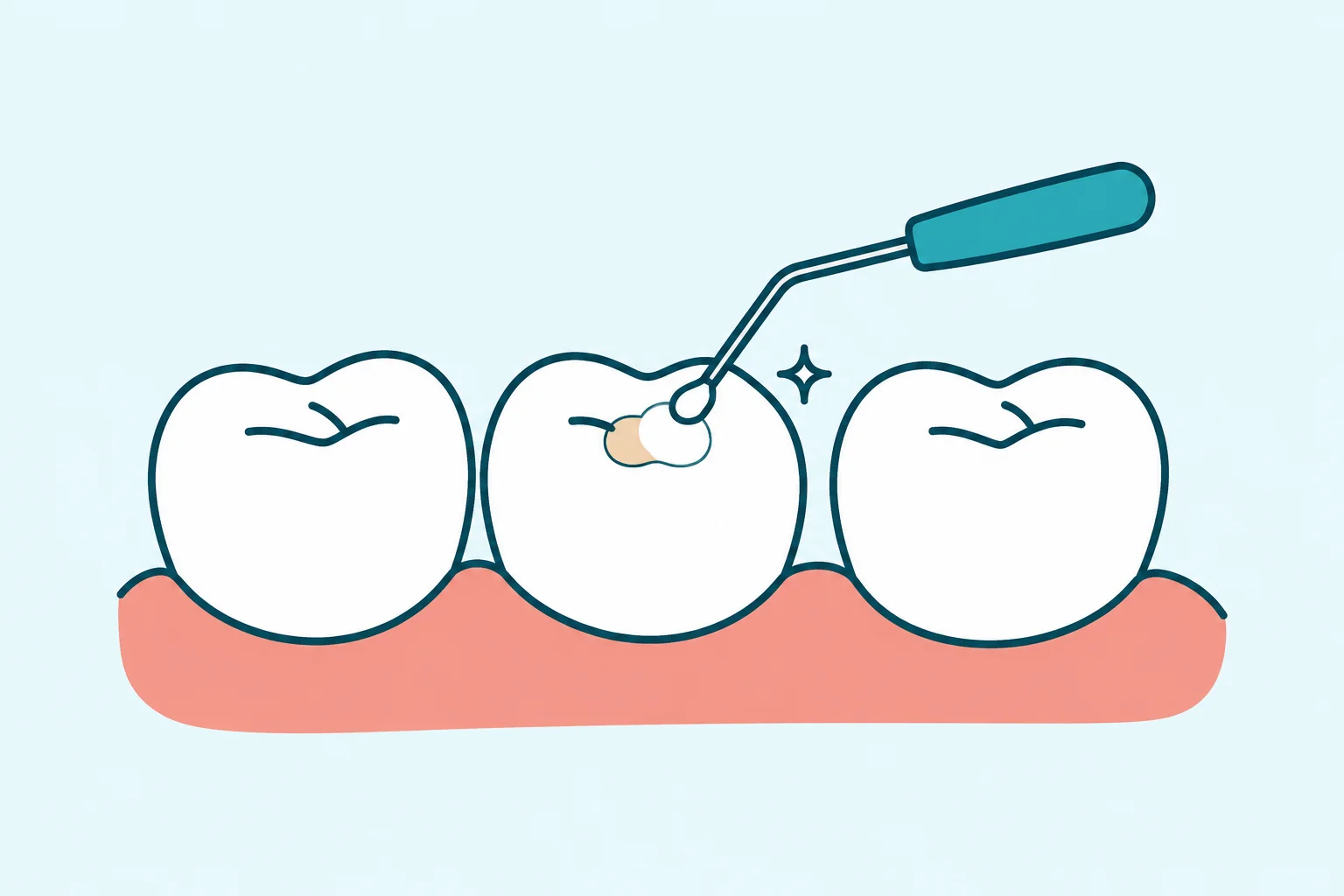
A filling repairs a tooth after decay has made a hole in it. The softened, damaged part is removed, and the space is rebuilt with a tooth-coloured composite that bonds to the healthy structure around it, restoring the tooth’s shape, strength and seal in a single visit.
At Happy Tooth Dental Clinic in Puchong we use composite that is matched to your tooth’s shade, on a molar or a front tooth alike.
Why early matters
Decay is a one-way street: a cavity never shrinks, and every month of waiting means a slightly bigger filling. The difference compounds: a small cavity is a 20-minute, painless visit, while a deep one sits close to the nerve and may need a root canal and crown instead. That is the honest economics of dentistry: the earlier the visit, the more uneventful the treatment, and uneventful is what you want.
If a tooth has been twinging with cold drinks or sweet food, that is usually the earliest warning you can feel. It is worth a look; often it is still just a filling.
Nothing unknown, nothing to fear
Numb if needed
Small, shallow cavities often need no anaesthetic at all. Anything deeper, we numb first and wait until it has fully taken.
The decay comes out
You hear the instrument and feel water spray and vibration, rather like a strong electric toothbrush. What you feel is pressure, not pain.
Building the filling
The tooth-coloured material goes in soft, shaped in thin layers, then set hard with a blue light. This part is completely painless; you just need to open wide.
Bite check
You tap on coloured paper so we can adjust the filling until your bite feels like nothing changed. Speak up if it feels even slightly off: 'almost right' isn't right.
Will it hurt? With numbing, you should feel vibration and pressure but not pain. Very shallow fillings are often done without any anaesthetic and most patients are surprised how little they feel. If anything sharp gets through, raise a hand; we stop, top up the numbness, and only then continue.
- DoWait for the numbness to fade before eating (1–2 hours)
- Don'tChew on the numb side; you can bite your cheek without noticing
- DoEat normally: modern fillings are fully set before you leave
- Don'tWorry about slight temperature sensitivity; it is common for a few days
- DoNotice your bite: if the filling feels "tall" once the numbness is long gone, tell us; a 5-minute polish fixes it
- Don'tPut up with a bite that feels off; adjusting it is quick and free of drama
Call us if: the tooth aches on its own without any trigger, sensitivity gets worse after the first week, or the filling feels high when you bite. All three are quick fixes when addressed early.
A filled tooth is back to full duty the same day. Mild sensitivity to cold may linger a few days as the tooth settles, and it should trend better, not worse. A well-placed filling lasts many years; we check them at every routine visit.
What determines the fee
- Size and depth of the cavity — a small early cavity is quicker to fill than one that has spread
- Which surface, which tooth — fillings between teeth or on chewing surfaces of molars take more shaping
- How many teeth — neighbouring cavities can often be treated in one visit
No surprises — that's the rule
You will get the exact fee after examination, before any treatment starts.

“The filling I love doing most is the tiny one: the cavity we caught at a check-up before it ever caused pain. Ten minutes, no drama, and that tooth gives no more trouble for years.”
Dr. Ong Xin Min · Founder, Happy Tooth Dental
Frequently asked questions
Are tooth-coloured fillings as strong as metal ones?
For the vast majority of cavities, yes: modern composite bonds to the tooth and strengthens it. For very large back-tooth repairs, we may recommend a stronger option and will explain why.
How long does a filling last?
Typically 5–10 years and often longer, depending on its size and your bite. We check existing fillings at every visit, so a wearing one gets replaced before it fails.
Why does my tooth need numbing for a "small" filling?
Depth matters more than width: a cavity close to the nerve is sensitive even if it looks tiny. When no anaesthetic is needed, we skip it; when it is, the injection is the only sting you should feel.
Can a cavity heal on its own?
Very early chalky spots can re-harden with fluoride and good brushing; real cavities cannot. Once a hole forms, it only grows; filling it early is what keeps the fix small.
Not sure what your tooth needs?
Book a consultation on WhatsApp — your dentist will examine first and explain your options honestly before anything is decided.
Book a consultation