
Teeth Scaling & Polishing
The simplest thing you can do for your gums: a professional clean that reaches the places your toothbrush can't.
When scaling helps, and when it's not the whole answer
Scaling is usually right when…
- It's been more than 6 months since your last professional clean
- Your gums bleed when you brush or floss
- You can see or feel hard deposits near the gum line
- Bad breath lingers no matter how well you brush
…but sometimes there's more going on
If your gums have been bleeding or receding for a long time, the deposits may have moved below the gum line. That needs gum treatment (a deeper, more careful clean) rather than a standard scaling.
Read about: Gum Treatment →Scaling removes deposits but not deep stains inside the tooth. If colour is your main concern, whitening is the treatment that addresses it.
Read about: Teeth Whitening →Our promise: During every scaling, your dentist checks your gums properly; if a standard clean is all you need, that is all we will recommend.
What is teeth scaling?
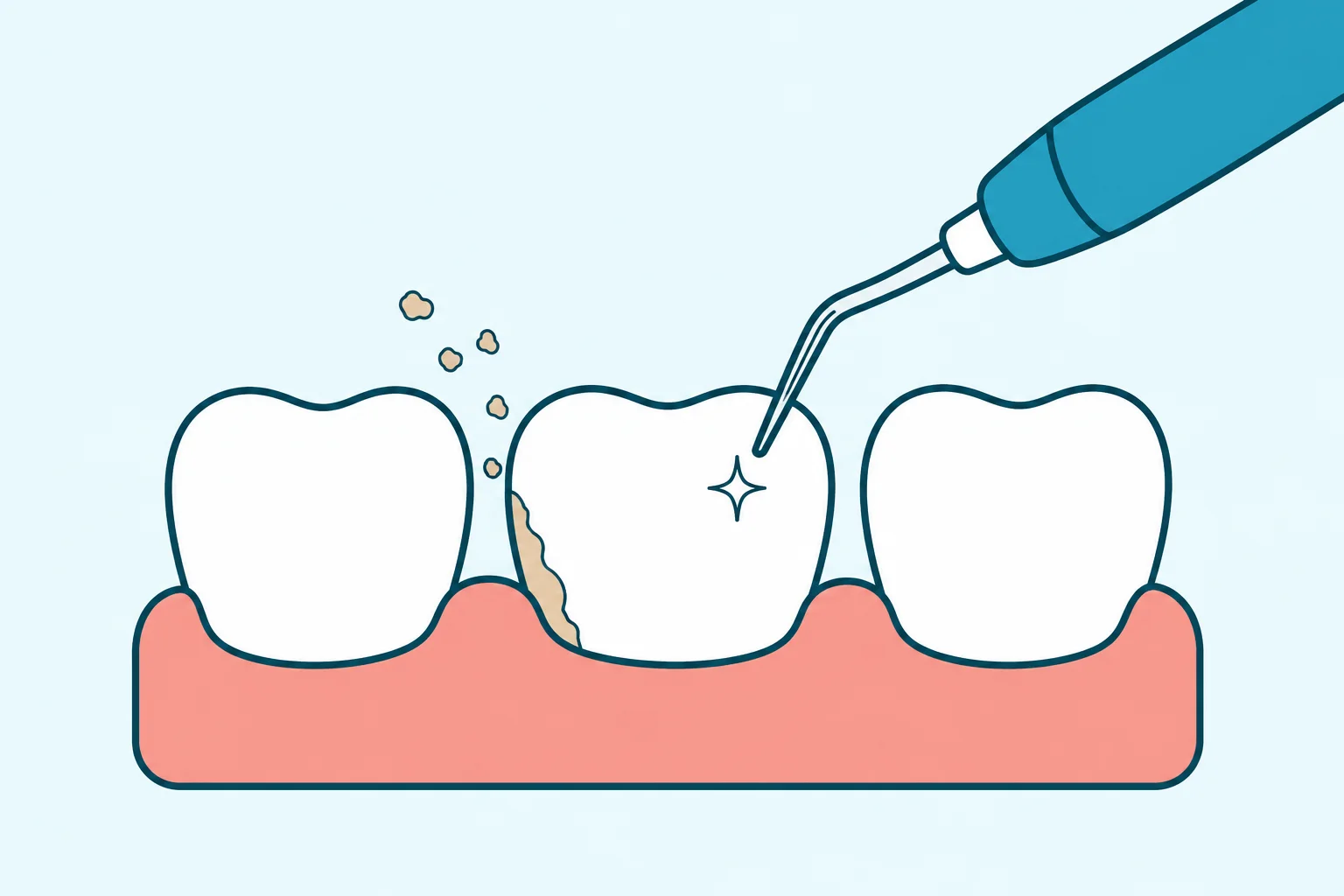
Scaling is a professional clean that removes plaque and tartar (hardened plaque) from your teeth, especially along and just under the gum line, where a toothbrush physically cannot reach. Left in place, tartar irritates the gums, causing bleeding, bad breath and, over time, gum disease. Because tartar is hard, it cannot be brushed away at home; it needs to be professionally removed.
At Happy Tooth Dental Clinic in Puchong, scaling is usually paired with polishing, which smooths the tooth surfaces afterwards so new plaque has a harder time sticking.
Why it matters more than it feels like it should
Scaling is quiet, routine and unglamorous, yet it prevents the majority of expensive dentistry. Gum disease is one of the most common reasons adults lose teeth, and it progresses silently: by the time a tooth feels loose, years of damage have already happened. A 30-minute clean every six months interrupts that process at the stage where it is still completely reversible.
If it has been years since your last clean, that is genuinely fine; there is no lecture waiting for you here. The first visit may take a little longer, and your gums may be tender for a day or two, but you will leave with a clean slate in the most literal sense.
Nothing unknown, nothing to fear
A look first
Your dentist checks your teeth and gums so you both know what today involves, with no surprises mid-way.
The ultrasonic clean
A small vibrating tip loosens tartar with water. You feel buzzing and coolness: a strange sensation at first, but not pain.
Polish to finish
A soft spinning cup with gritty toothpaste smooths the surfaces so plaque has nothing to grip. It tickles more than anything.
Will it hurt? For most people, scaling isn't painful, just noisy and a little strange. If your gums are inflamed or your teeth are sensitive, some spots may sting briefly; tell us and we adjust the setting, slow down, or numb the area. You are in control the whole time.
- DoEat and drink as normal: nothing is off-limits
- DoExpect slightly tender gums if there was heavy buildup
- Don'tBe alarmed by tiny gaps you can suddenly feel; that's where tartar used to sit
- DoBrush and floss normally, gently around tender spots
- DoRinse with warm salt water if gums feel sore
- Don'tSkip brushing because gums bled a little; clean gums heal fast
- DoNotice how smooth your teeth feel, and keep them that way with twice-daily brushing
- Don'tWorry about brief cold sensitivity; it settles within days
Call us if: gum bleeding continues beyond a couple of days, or any sensitivity gets worse instead of better. A quick WhatsApp message is all it takes.
There is nothing to heal from: scaling is maintenance, not surgery. Gums that were puffy tighten up over the following week, and any minor sensitivity fades. For most people, a clean every 6 months keeps things exactly this easy.
What determines the fee
- Amount of buildup — a light 6-month maintenance clean is quicker than clearing years of tartar
- Gum condition — inflamed gums need gentler, slower work, and sometimes a follow-up visit
- Stain polishing — heavy coffee, tea or smoking stains take extra polishing time
No surprises — that's the rule
You will get the exact fee after examination, before any treatment starts.

“Scaling is the appointment where I get to give the best news: most things I see are preventable, and this simple clean is the prevention. Twice a year, and most of dentistry never has to happen to you.”
Dr. Ong Xin Min · Founder, Happy Tooth Dental
Frequently asked questions
Does scaling damage or thin the enamel?
No. The ultrasonic tip vibrates tartar off the surface without cutting into enamel; it is far gentler than the tartar itself, which harbours bacteria that inflame your gums.
Why do my gums bleed during scaling?
Bleeding during scaling almost always means the gums were already inflamed: tartar has been irritating them, and inflamed gums bleed at the lightest touch. It is a sign the clean was needed, not a sign of damage. Once the tartar is gone, the inflammation settles, and gums that bled easily usually stop within a week or two of gentle, consistent brushing.
Why do my teeth feel "loose" or gappy afterwards?
Tartar can pack the spaces between teeth so tightly it feels like part of them. Once removed, those spaces feel new and strange for a few days. Nothing has loosened; your gums will adapt quickly.
How often should I get scaling done?
Every 6 months for most people. If you build tartar quickly, or have gum issues, we may suggest a shorter interval, and we will tell you the reason, not just the schedule.
Will scaling make my teeth whiter?
It removes surface stains from coffee, tea and smoking, so teeth often look brighter afterwards. It does not change the natural shade of the tooth itself; that is what whitening does.
Can scaling help with bad breath?
Often, yes. Persistent bad breath usually comes from bacteria living in plaque and tartar along the gum line, just where a toothbrush cannot fully reach. Scaling removes those deposits at the source, and many people notice fresher breath within days. If it lingers after a proper clean, that points to something deeper (gum pockets, or occasionally a non-dental cause), and we will tell you honestly which it is.
Not sure what your tooth needs?
Book a consultation on WhatsApp — your dentist will examine first and explain your options honestly before anything is decided.
Book a consultation