

How does a cavity actually form?
Bacteria in your mouth feed on sugars and starches from food, and produce acid. That acid attacks the enamel (the tooth’s hard outer shell) and pulls minerals out of it, a little at a time. This happens every single day: after every sweet bite or sugary sip, the tooth surface goes through roughly half an hour of acid attack.
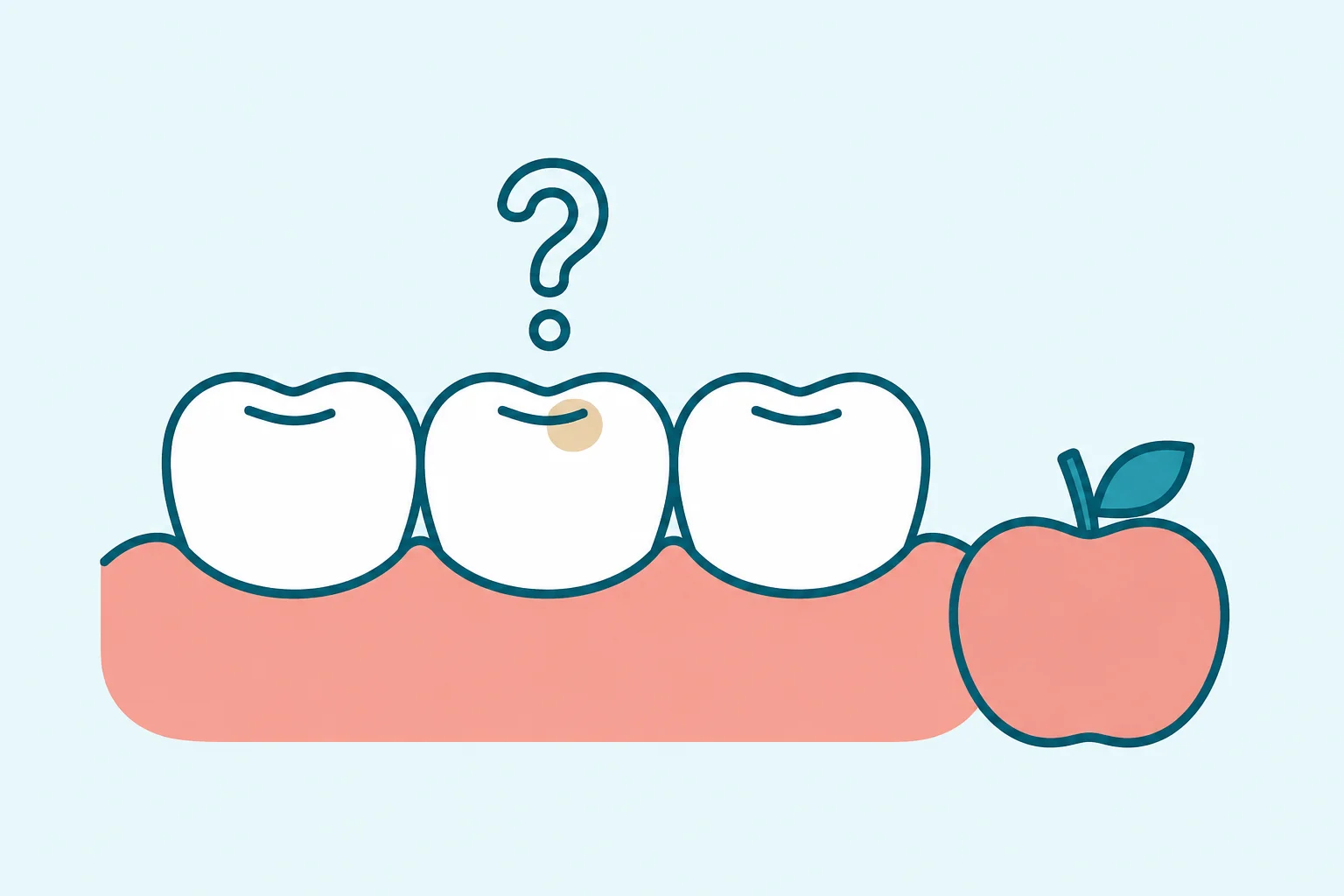
A cavity is not a hole that suddenly appears; it is a chain of stages. First a chalky white spot shows on the enamel, a sign that minerals are leaching out. Then the enamel breaks through into a real hole. Then the decay reaches the softer dentine underneath, where it speeds up considerably. Only when it finally approaches the pulp, the nerve inside the tooth, does pain appear. Getting from white spot to a hole through the enamel often takes months or years, and that stretch of time is your window to act.
Can a cavity heal on its own?
The honest answer has two parts.
At the white-spot stage: yes. Minerals from your saliva, helped by fluoride toothpaste, can re-harden enamel that has started to soften. This is called remineralisation, and it is the only “self-healing” a tooth can do.
Once an actual hole has formed: no. Enamel is the hardest substance in your body, but it contains no living cells and cannot regrow. A hole never shrinks; it only grows. That is why the answer to “will it heal?” depends entirely on how early you catch it, and why a white spot is worth showing to a dentist: it is the only reversible stage in the whole chain.
Why doesn’t a cavity hurt?
Because enamel has no nerves in it, the first half of a cavity’s progress is completely silent. By the time a tooth twinges with cold or sweet things, the decay has usually reached the dentine. By the time it aches on its own, it is often at the nerve, and at that point the fix is no longer a filling but a root canal.
“It doesn’t hurt, so it can wait” is exactly how small cavities turn into big problems. It helps to translate the timeline into treatment: an early cavity is a 20-minute filling, often without anaesthetic; a cavity that waited until it hurt frequently ends in a root canal plus a crown. The earlier the visit, the simpler and cheaper the treatment.
Why do some people get more cavities than others?
- Frequency matters more than quantity. Sipping sweet drinks all day (sweetened kopi, bubble tea, soft drinks) keeps your teeth bathed in acid from morning to night. The same sugar taken in one sitting does far less damage.
- Bedtime snacks do the most damage. Saliva flow drops at night, taking away the mouth’s natural rinsing and repair, so sugar left on the teeth keeps feeding bacteria until morning.
- Some places a toothbrush simply cannot reach. Between the teeth, in the deep grooves of molars, along the edges of old fillings: these are the spots brushing misses, and the reason cavities keep appearing in the same places.
- Saliva itself varies. People with a dry mouth, whether from medication or habit, have a thinner natural defence.
What actually prevents cavities?
No elaborate routine required, just a few small things done right. Brush twice daily with fluoride toothpaste, and when you finish, spit out the foam instead of rinsing with lots of water: the fluoride left on your teeth keeps working, and this is the one change most people have never heard of. Keep sweet things to mealtimes instead of spreading them across the day. Floss the surfaces between teeth; they make up about a fifth of each tooth’s surface, and most cavities start there. And come for a routine check-up so white spots get caught while they can still be reversed.
What if you can already see a hole?
If you can see a dark spot or a small hole but nothing hurts yet, come in for a filling; an early cavity is one of the quickest, gentlest treatments in dentistry. If there is already lingering sensitivity, or the tooth aches without any trigger, it may be past the filling stage. Our guide on reading toothache walks through what each kind of pain means.
At Happy Tooth Dental Clinic in Puchong, we show you what we see, on the X-ray or in the mirror, so you understand why a filling is enough, or why it is not, before anything begins.