
Root Canal Treatment
The treatment that saves teeth other treatments can't. Done properly, it relieves pain rather than causes it.
When a root canal saves the tooth, and when it isn't the answer
Root canal treatment is usually right when…
- A deep cavity has reached the nerve, causing a lingering or throbbing ache
- A tooth stays sensitive long after hot or cold is gone
- A tooth has darkened after an old injury
- An abscess (gum pimple or swelling) has formed near the root
…but it isn't always the right call
If decay has destroyed too much of the tooth, or the root itself is cracked, saving it may not be possible or worthwhile; an extraction followed by a bridge can be the more honest recommendation.
Compare: Tooth Extraction →And if the nerve is still healthy (if the pain goes away as soon as the trigger does), the tooth may only need a filling. We check before assuming.
Read about: Tooth Fillings →Our promise: We will tell you plainly whether this tooth is worth saving, including when it is not. No treatment gets recommended just because it can be done.
What is a root canal treatment?
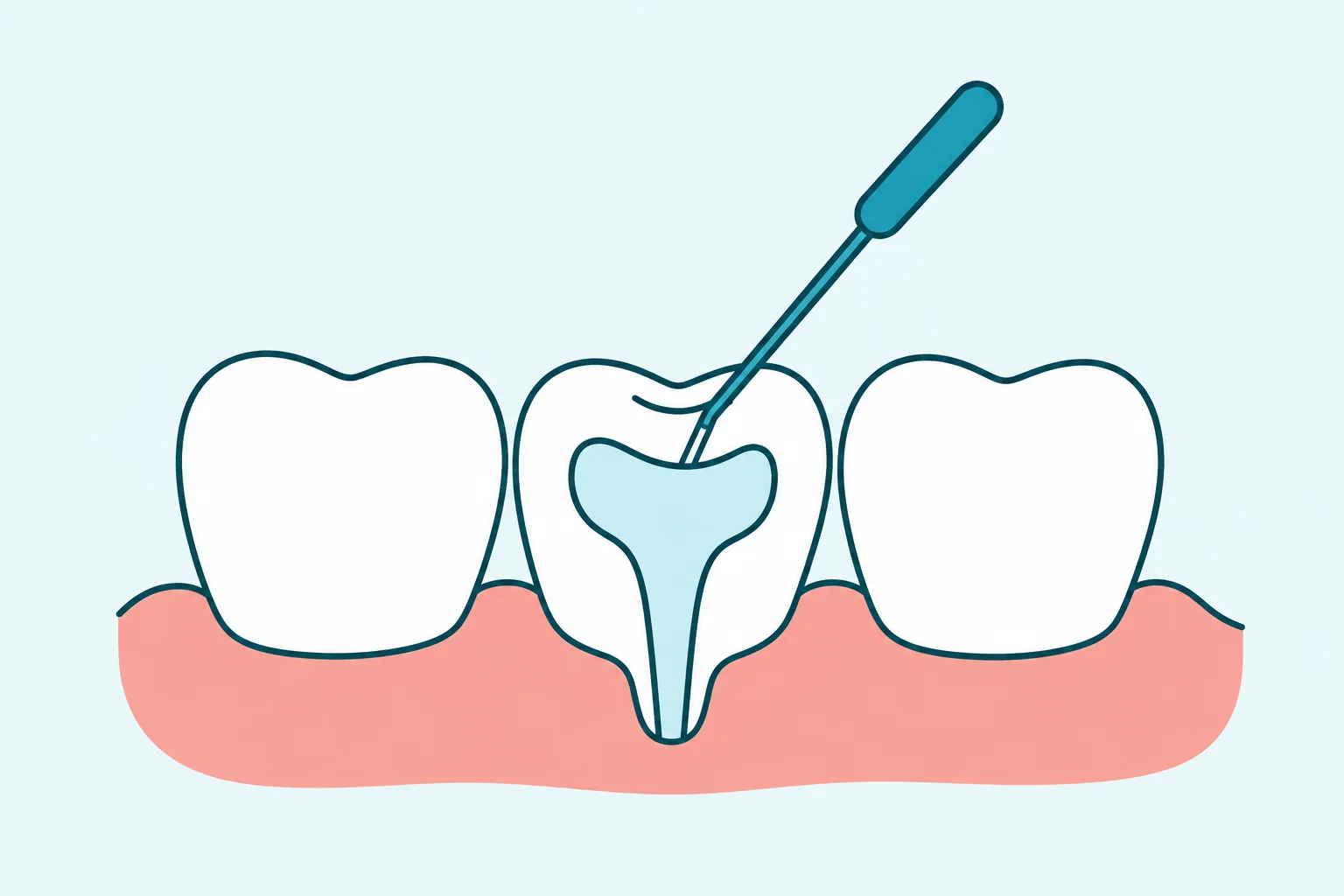
Inside every tooth is a soft core of nerves and blood vessels. When deep decay or a crack lets bacteria reach it, the tissue becomes inflamed. This is the classic, unforgettable toothache. A root canal treatment removes that inflamed tissue, cleans and disinfects the channels it lived in, and seals them so bacteria cannot return. The tooth stays in your mouth, in your bite, doing its job.
It is worth saying clearly: the root canal does not cause the famous pain, the infection does. The treatment is how the pain ends.
Why saving the tooth is worth it
No implant, bridge or denture matches the performance of your own tooth root: it feels natural, chews at full strength, and keeps the bone around it stimulated and healthy. A root canal plus crown typically costs less than extracting and replacing the tooth, and preserves options that removal takes away permanently. That is why, whenever the tooth is genuinely savable, saving it is the recommendation you will hear at Happy Tooth Dental Clinic in Puchong.
The honest caveat
Not every tooth can or should be saved: a vertical crack in the root, or too little remaining structure, changes the calculation. When that is the case, we will tell you before treatment begins, not after.
Nothing unknown, nothing to fear
Numb, completely
The tooth and area around it are fully numbed, and we test before starting. A tooth that has been aching for days finally goes quiet; for many patients this is the first relief in a while.
The inside is cleaned
The inflamed tissue inside the tooth (the source of the pain) is removed through a small opening. You feel fine vibrations and hear working sounds, but no pain.
Shaped and disinfected
The empty channels are rinsed and shaped so nothing is left behind. This is patient, quiet work, about the length of a podcast episode.
Sealed and closed
The clean channels are filled and sealed, and the tooth closed with a filling. A crown usually follows later to protect it long-term.
Will it hurt? A root canal's reputation is decades out of date. With modern anaesthesia you should feel vibration and pressure during treatment, but no pain. Most patients arrive in pain and leave out of it. If anything gets through, raise a hand and we stop and re-numb. Always.
- DoWait for numbness to fade before eating
- DoTake the painkillers as advised if the area feels bruised
- Don'tChew hard food on the treated tooth yet
- DoBrush and floss normally; the tooth needs cleaning like any other
- DoExpect mild tenderness when biting; it fades over a few days
- Don'tCrack nuts, ice or anything hard on that side until the tooth is crowned
- DoCome back for the crown when advised; the seal is what makes the result last
- Don'tSkip the final restoration; an unprotected treated tooth can fracture
Call us if: swelling appears or grows, pain increases after the third day instead of easing, or the temporary filling comes out. All are manageable, and the sooner they are handled the smaller they stay.
Tenderness on biting fades over a few days to a week. The tooth is no longer alive inside, but well sealed and crowned it can chew for decades, staying in place and in service.
What determines the fee
- Which tooth — front teeth have one canal; molars have three or four and take longer
- How complex the canals are — curved or narrow canals need more time and finer instruments
- The final restoration — the crown that protects the tooth afterwards is planned and priced separately, upfront
No surprises — that's the rule
You will get the exact fee after examination, before any treatment starts.

“Patients fear the root canal and I understand why: the old stories were real. But today, my root canal patients fall asleep in the chair more often than any others. The pain comes from the toothache; the treatment is what ends it.”
Dr. Ong Xin Min · Founder, Happy Tooth Dental
Frequently asked questions
Is it better to just pull the tooth out?
Keeping your own tooth is almost always better: nothing artificial chews, feels or lasts quite like it. But when a tooth genuinely cannot be saved, we will say so rather than treat for the sake of treating.
How many visits will it take?
Usually 1–3 visits, depending on the tooth: molars or infected teeth often need an extra visit or two, with a disinfecting dressing placed in between. You will know the plan before we start.
Why does the tooth need a crown afterwards?
A root-treated tooth is more brittle and usually already lost structure to decay. A crown wraps and protects it; without one, a deep bite on the wrong grain of rice can crack what the root canal saved.
The pain disappeared on its own. Do I still need treatment?
Unfortunately, yes, and often more urgently. A nerve can die quietly, and the infection continues without pain until it resurfaces as an abscess. A pain that vanished deserves an X-ray, not a celebration.
Not sure what your tooth needs?
Book a consultation on WhatsApp — your dentist will examine first and explain your options honestly before anything is decided.
Book a consultation