
Tooth Extraction
When a tooth truly can't be saved, removing it gently is the kindest thing we can do, for the tooth next door and for you.
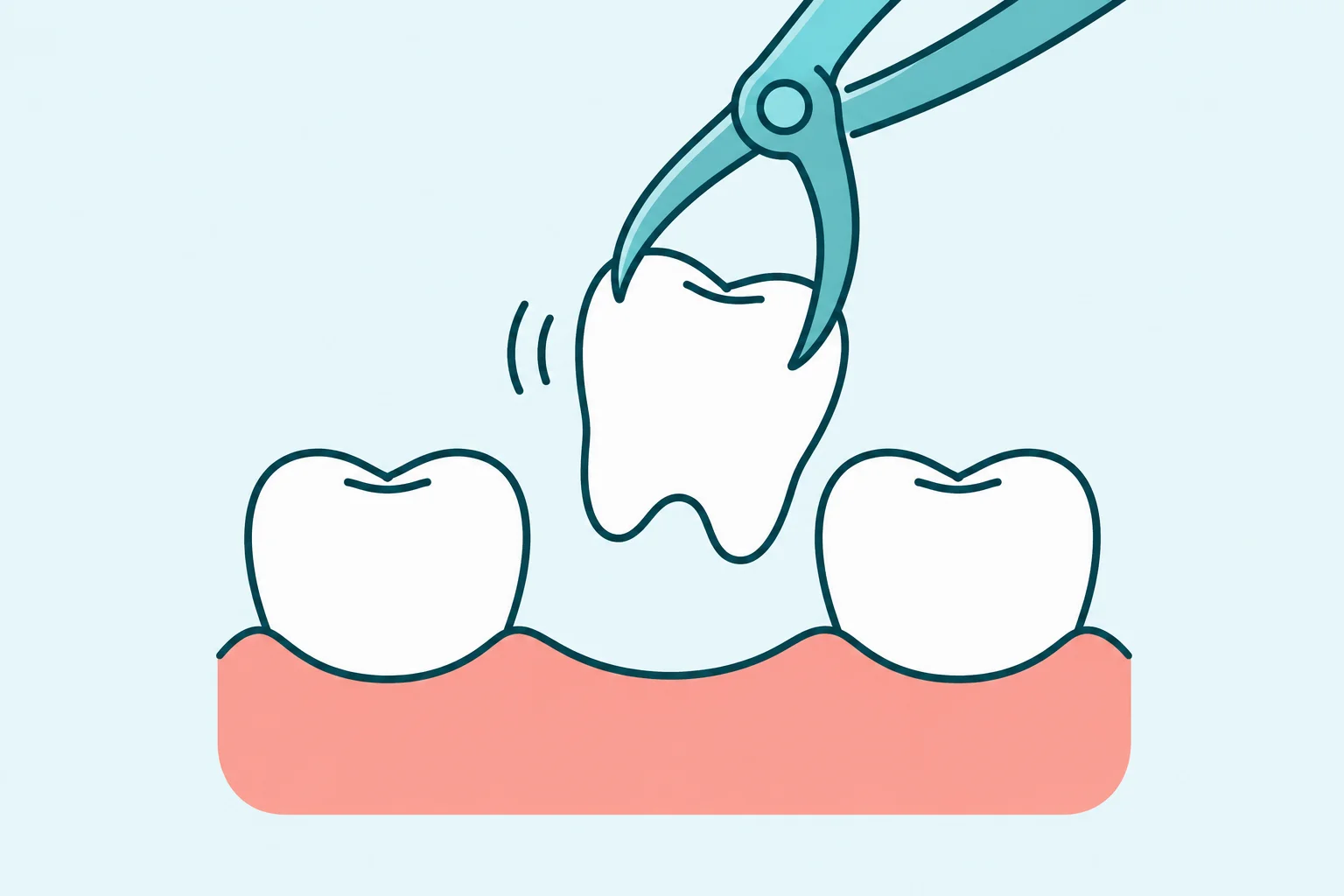
When a tooth needs to go, and when it doesn't
Extraction is usually right when…
- Decay has destroyed too much of the tooth to repair
- Advanced gum disease has loosened the tooth beyond saving
- A wisdom tooth is impacted or repeatedly infected
- Teeth need space before orthodontic treatment
…but not every aching tooth needs extraction
If the root is still healthy, a root canal can often save the tooth, and keeping your own tooth is almost always the better long-term outcome.
Compare: Root Canal Treatment →A badly broken but savable tooth may instead need a crown to hold it together.
Read about: Crowns & Bridges →Our promise: We will always tell you if a tooth can be saved before recommending extraction.
What is a tooth extraction?
An extraction is the removal of a tooth that can no longer be saved, usually because decay, fracture or gum disease has gone past the point where a filling, crown or root canal would work. It is one of the oldest and most predictable procedures in dentistry, and with modern anaesthesia it is far gentler than its reputation.
At Happy Tooth Dental Clinic in Puchong, an extraction always starts with an examination and an honest conversation. If the tooth can be saved, we will tell you, along with what saving it involves, so you can weigh both paths properly.
Simple vs. surgical extraction
A simple extraction deals with a tooth that is visible and reachable: it is numbed, gently loosened and lifted out. A surgical extraction is needed when a tooth is broken at the gum line or impacted (common with wisdom teeth). It takes more time and a more careful technique, which is also why the fee differs. You will always know which kind yours is, and why, before anything begins.
Life after an extraction
Most people are back at work the next day. The space heals over within a couple of weeks, and whether to fill the gap (with a bridge, denture or implant) is a decision you can make later, without pressure, once everything has settled.
Nothing unknown, nothing to fear
Numb first, always
Local anaesthetic around the tooth. We wait until you're fully numb; no rushing.
Gentle loosening
The tooth is eased side to side until it lets go. You'll feel pressure, not pain.
Out, and checked
The tooth is removed and the area cleaned and checked before you close.
Bite on gauze
You bite gently on gauze while a protective clot forms. That's it; you're done.
Will it hurt? The honest answer: the injection stings for a few seconds, and after that you should feel pressure but not pain. If you feel anything sharp, raise your hand and we stop. That is the deal.
- DoKeep biting on the gauze for 30–60 minutes
- DoRest and take the day easy
- Don'tRinse, spit, or poke the area
- DoEat soft, cool food on the other side
- DoTake painkillers as prescribed
- Don'tUse straws, smoke, or drink alcohol
- DoGentle warm salt-water rinses after meals
- DoBrush normally, avoiding the extraction spot
- Don'tWorry about mild soreness; it fades daily
Call us if: bleeding doesn't stop after a few hours, pain gets worse after day 3 instead of better, or you develop fever or swelling. WhatsApp us anytime; we'd rather hear from you twice than not at all.
The gum usually closes over in 1–2 weeks; the bone underneath remodels over a few months. If the gap matters for chewing or appearance, we'll talk you through replacement options (a bridge, denture or implant) at your pace, no pressure.
What determines the fee
- Simple or surgical — a loose tooth is quick; an impacted wisdom tooth takes more time and care
- Position and condition — molars and teeth broken at the gum need more work
- X-rays if needed — we only take them when they change the plan
No surprises — that's the rule
You will get the exact fee after examination, before any treatment starts.

“Extractions have a scary reputation they no longer deserve. Numb properly, work gently and explain everything, and most patients tell me afterwards it was easier than the toothache.”
Dr. Ong Xin Min · Founder, Happy Tooth Dental
Frequently asked questions
Can I drive home afterwards?
Yes, local anaesthesia does not affect your ability to drive. Your lip and cheek will feel numb for a few hours, that is all.
How painful is it once the numbness wears off?
Expect soreness for a day or two, well controlled with ordinary painkillers. Most patients say it is far milder than the toothache that brought them in.
What is dry socket, and how do I avoid it?
Dry socket happens when the healing clot dislodges. It is uncomfortable but treatable. Avoiding straws, smoking and vigorous rinsing for 72 hours prevents most cases.
Do I need to replace the extracted tooth?
Not always, but a gap can let neighbouring teeth drift over time. We will explain your options (bridge, denture or implant), and there is no obligation to decide right away.
Not sure what your tooth needs?
Book a consultation on WhatsApp — your dentist will examine first and explain your options honestly before anything is decided.
Book a consultation