
Crowns & Bridges
A crown protects a weakened tooth; a bridge fills the space a lost one left behind. Both give you back a normal bite.
When a crown (or bridge) is the answer, and when less will do
A crown or bridge is usually right when…
- A tooth is heavily filled or cracked and needs full-coverage protection
- A root canal–treated tooth needs strengthening
- A tooth is worn, misshapen or badly discoloured beyond what whitening fixes
- A missing tooth needs replacing and the neighbours are strong (bridge)
…but crowning a tooth that needs less is over-treatment
If the damage is modest and enough healthy tooth remains, a well-bonded filling protects it at a fraction of the preparation; we always ask "can this be filled?" first.
Compare: Tooth Fillings →For front teeth where the concern is purely cosmetic (colour or minor shape), a veneer preserves far more of your natural tooth than a crown.
Read about: Veneers →Our promise: A crown involves reshaping your natural tooth, which cannot be undone, so we recommend one only when protecting the tooth genuinely requires it.
What are crowns and bridges?
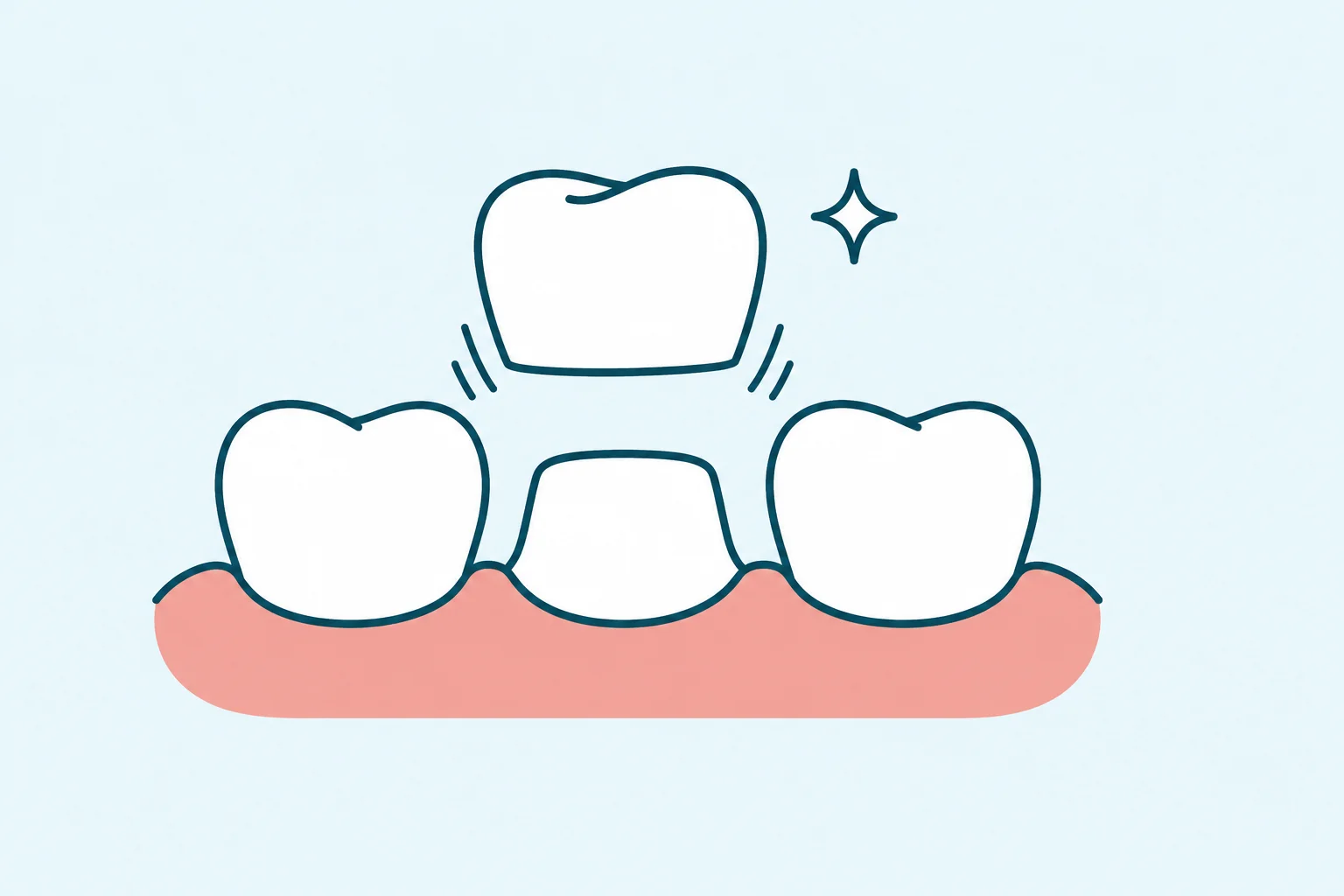
A crown is a custom-made cover that wraps a weakened tooth completely, restoring its shape, strength and appearance while protecting what remains underneath. A bridge uses crowns on the teeth either side of a gap to hold a replacement tooth between them, fixed in place, no removing at night.
Both are made in a dental laboratory to match your bite and your tooth shade, which is why the treatment takes two visits: one to prepare and capture the shape, one to fit the finished work.
When protection beats patching
Teeth that are heavily filled, cracked or root canal–treated fail in a particular way: not gradually, but suddenly, under an unlucky bite. A crown’s job is to make that fracture mechanically impossible by absorbing and spreading the load. It is the difference between reinforcing a wall and repainting it: sometimes the paint is enough, and when it is, a filling is what we will recommend instead.
A gap is never just a gap
A missing tooth quietly changes the teeth around it: adjacent teeth tilt into the space, the opposing tooth over-erupts, and chewing shifts to the other side. A bridge stops that drift while giving you back a full bite. At Happy Tooth Dental Clinic in Puchong, replacing a lost tooth is never pushed on the same day it is lost, but it is a conversation worth having once healing is done.
Nothing unknown, nothing to fear
Shaping the tooth
Under local anaesthesia, the tooth is trimmed to make room for its new cover. You feel vibration and water spray, like a longer filling appointment: pressure but not pain.
The impression
A digital scan or mould captures the exact shape for the lab. The mould feels like biting soft putty for a minute or two.
A temporary meanwhile
You leave with a temporary crown: perfectly wearable, just treat it gently. Life goes on as usual while the lab works.
Fitting the real one
The permanent crown is tried in, checked against your bite and the mirror handed to you for approval, then cemented. From that moment you chew on it like your own.
Will it hurt? The preparation visit is done fully numbed: expect the sensations of a long filling, not pain. Between visits the prepared tooth may be mildly sensitive to cold under its temporary; the fitting visit itself usually needs no anaesthetic at all.
- DoChew on the other side when you can
- DoBrush normally, floss with a gentle slide-out motion
- Don'tEat sticky or chewy food that could lift the temporary off
- DoEat normally: the cement reaches full strength quickly
- DoTell us if the bite feels even slightly tall; adjusting takes minutes
- Don'tWorry about mild gum tenderness around the new edge; it settles in days
- DoBrush and floss the crown like a natural tooth; the gum line around it still needs you
- DoKeep your 6-monthly check-ups so we can watch its margins
- Don'tUse your crown as a bottle opener; it is strong, not invincible
Call us if: the temporary comes off (keep it; we re-fit it), the permanent crown ever feels loose, or the bite still feels off after a few days. Small adjustments early prevent bigger issues later.
There is no wound to heal, just a settling-in period. Any gum tenderness fades within days, and within a week or two most patients forget which tooth is crowned. Well cared for, a crown or bridge routinely serves 10–15 years.
What determines the fee
- Material — full ceramic, porcelain-fused-to-metal or zirconia; each balances strength, aesthetics and cost differently
- Crown or bridge, and how many units — a bridge spans at least three units: the missing tooth plus its two anchors
- Groundwork the tooth needs first — a root canal or core build-up, if needed, is planned and priced before anything starts
No surprises — that's the rule
You will get the exact fee after examination, before any treatment starts.

“A good crown is invisible twice over: nobody can spot it in your smile, and you yourself forget it's there. That second kind of invisible is the one I work hardest for.”
Dr. Ong Xin Min · Founder, Happy Tooth Dental
Frequently asked questions
What's the difference between a crown and a filling?
A filling patches a hole from within the tooth; a crown wraps the whole tooth in a protective cover. When too little healthy tooth remains to anchor a filling, a crown is what prevents the next crack.
How is a bridge different from a denture or implant?
A bridge is fixed: cemented onto the teeth beside the gap, no removing at night. A denture is removable; an implant replaces the root itself. Each suits different situations and budgets, and we will lay out yours honestly.
Does a crowned tooth still decay?
The crown itself cannot decay, but the gum-line margin where it meets your tooth can, which is why brushing, flossing and check-ups matter just as much after crowning.
Will the crown match my other teeth?
Yes. Shade is matched before the lab makes it, and you approve the look in a mirror before it is permanently cemented. If it is not right, it goes back to the lab, not into your mouth.
Not sure what your tooth needs?
Book a consultation on WhatsApp — your dentist will examine first and explain your options honestly before anything is decided.
Book a consultation