

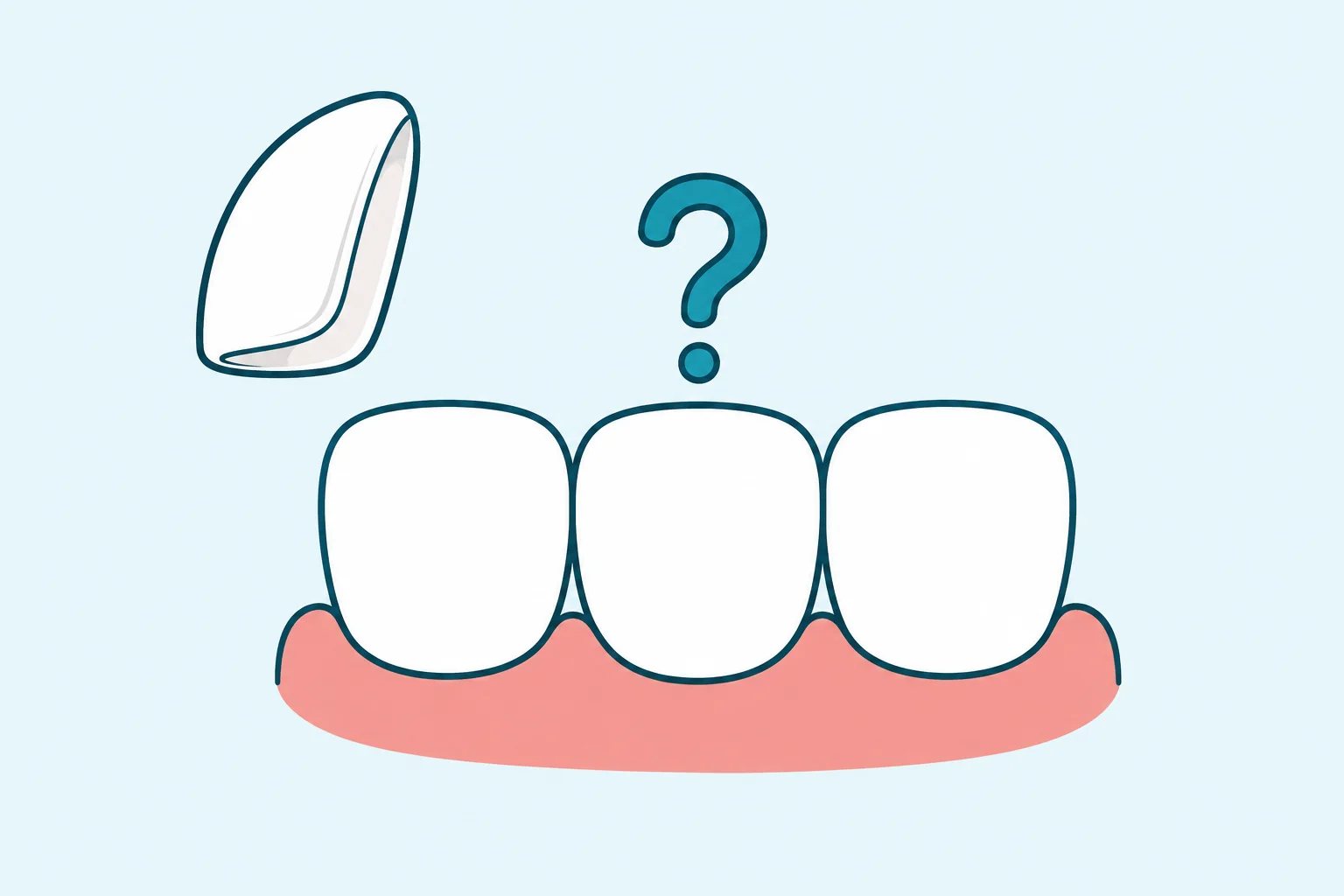
Where the fear comes from
You have probably seen the videos: a full row of teeth ground down into tiny brown pegs, captioned something like “what they don’t tell you about veneers”. The fear is understandable, and the footage is real. What it shows, however, is almost never veneers. Those pegs are teeth prepared for full crowns, often a whole mouth of them at once, and frequently done far more aggressively than any tooth needed.
That distinction is the heart of this article, because the honest answer to “do veneers ruin your teeth” depends entirely on what was actually done, by whom, and whether a veneer was the right treatment in the first place.
Veneer and crown are not the same operation
A crown wraps the entire tooth, so the tooth must be reduced on every surface to make room. That is major, justified only when a tooth is already heavily filled, cracked or root-treated and needs structural protection.
A veneer covers only the front face. Preparing one removes a wafer-thin layer from that face, a fraction of a millimetre, staying within the enamel. The tooth keeps its back, its sides, its biting structure and its nerve. Side by side, a crown preparation and a veneer preparation do not even look like the same procedure, and the shaved-peg videos are showing you the first one.
What actually happens under a veneer
Once bonded, the veneer seals the prepared surface completely; nothing is left exposed. The tooth underneath stays alive, feels temperature through its other surfaces, and is brushed and flossed exactly as before. At your regular check-ups the bond line is monitored, which is one reason veneers and skipped dental visits are a bad combination. A well-made, well-bonded veneer protects the surface it sits on; the enamel under it is not rotting in the dark, whatever the comment sections say.
The part that is genuinely irreversible
Now the honest side of the ledger: the enamel that is removed never grows back. A veneered tooth will need a veneer on it for the rest of its life, replaced perhaps once or twice over the decades as bonding ages. That is not damage, but it is a lifelong commitment, and anyone who says otherwise is selling. It is exactly why the decision deserves a calm assessment, not a sales pitch.
The four ways veneers really do ruin teeth
- Veneering over crooked teeth. Faking alignment with ceramic means cutting healthy teeth into the required shape. This is the classic regret case; braces or aligners move the teeth honestly instead.
- Veneering when whitening would have done. Trading permanent enamel for a colour change a gel could deliver is a bad exchange, which is why colour complaints get a whitening conversation first.
- Over-aggressive preparation. Discount packages and beauty-salon “veneers” that grind deep past the enamel turn a conservative treatment into crown territory without telling you. Sensitivity and nerve trouble follow. Price shopping is how most of the horror stories start.
- Veneering over untreated decay or gum disease. Ceramic over an unhealthy foundation locks the problem in. Health always comes before cosmetics.
Notice what all four have in common: the veneer itself was never the villain. The villain was the wrong case, or the wrong hands.
If the idea of any drilling stops you
Composite bonding builds on the tooth with little or no preparation, and for small corrections it delivers much of the result with almost none of the commitment. It trades lifespan and stain resistance for reversibility, a trade we compared honestly in porcelain vs composite veneers. For nervous first-timers, it is often the right first step.
Four questions to ask before you say yes
Wherever you end up having it done, ask these, and listen carefully:
- How much enamel will you remove, and will the preparation stay within it?
- Is this a veneer or actually a crown?
- Why is this better for my case than whitening or alignment?
- What will these teeth need in ten to fifteen years?
A dentist with good answers will enjoy the questions. Evasive answers are your cue to leave.
The honest bottom line
Properly planned veneers on the right teeth do not ruin anything; they remove less tooth than a single average filling and protect what they cover. At Happy Tooth Dental Clinic in Puchong, the consultation is where we tell you which of those conditions your case meets, and if the honest answer is that whitening, bonding or alignment serves you better, you will hear that before anyone mentions ceramic.