

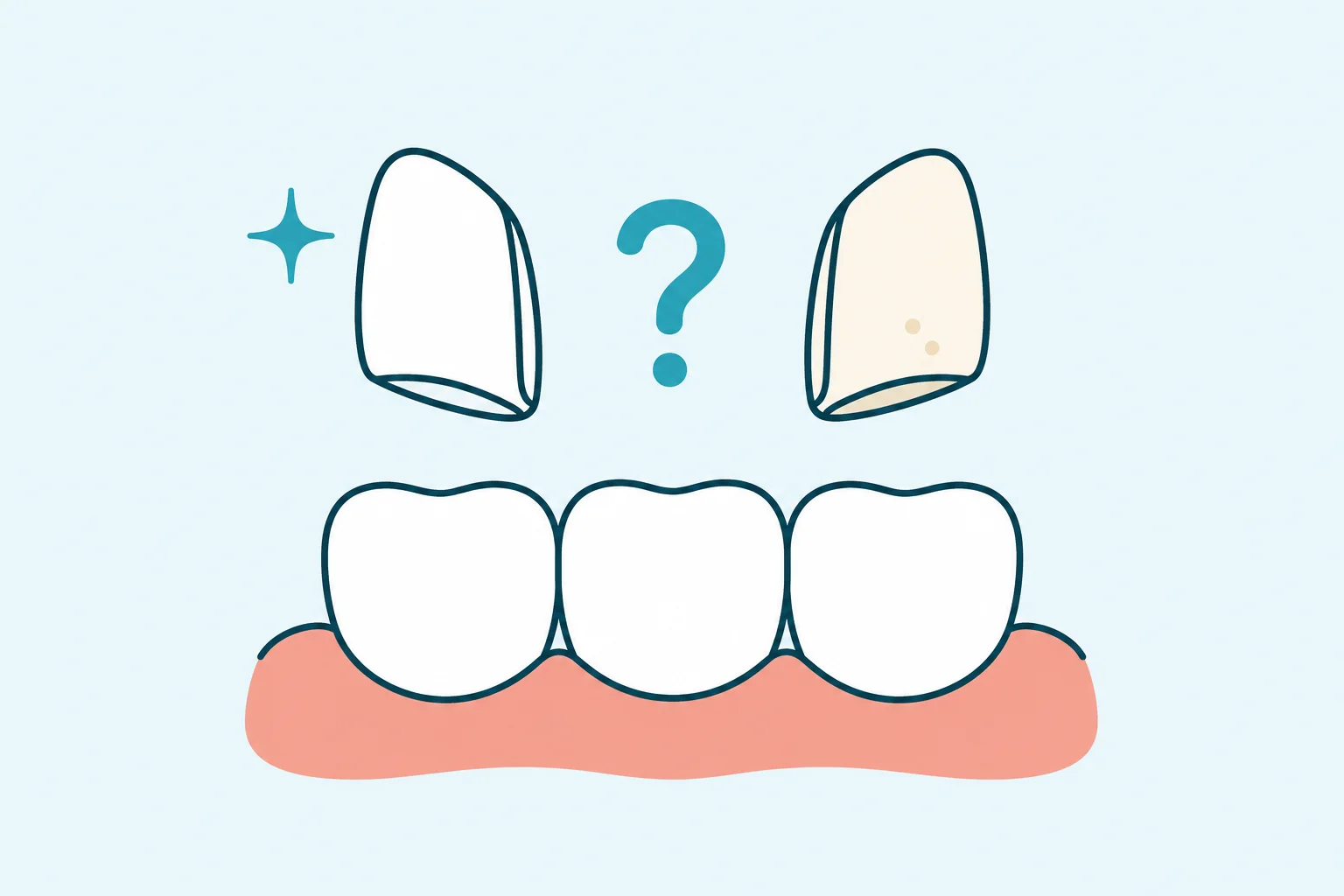
Same goal, two very different routes
A veneer is a thin new front surface for a tooth, changing its colour or shape while keeping the tooth underneath. There are two ways to make one. Porcelain veneers (dentists usually say ceramic) are wafer-thin shells custom-built in a dental lab, then bonded onto the tooth at a second visit. Composite veneers are sculpted directly onto the tooth by the dentist, using the same tooth-coloured resin as a modern filling, shaped and polished in a single appointment.
Same goal, very different journeys, and the differences that matter are not the ones in the brochure photos, because on day one both look excellent. The differences show up in the calendar and the wallet.
The one-visit difference
Composite happens entirely in the chair: the resin goes on, gets shaped, light-cured and polished, and you walk out the same day. For small corrections it often needs little or no drilling, which makes it the gentlest starting point.
Ceramic is a two-visit project, usually one to two weeks apart: a wafer-thin layer of enamel is smoothed away so the shell sits flush, a scan goes to the ceramic lab, you wear neat temporaries meanwhile, and the finished veneers are tried in, approved by you in the mirror, and bonded. The full process is on our veneers page.
How they age is what decides everything
Composite resin is slightly porous. Kopi, teh, curry and cigarette smoke slowly work into its surface: over a few years it loses its gloss, picks up stain along the edges, and needs re-polishing to look fresh. Well-maintained composite typically looks good for around four to seven years before it needs repair or replacement.
Ceramic is glazed and non-porous, so it holds its shade and polish better than your own enamel does. Well-made, well-bonded ceramic veneers routinely last ten to fifteen years, and they are still the same colour at year ten as they were at bonding.
If your daily routine involves serious coffee or tea, this difference is not a footnote; it is the whole comparison.
The honest ten-year cost
Per tooth, today, composite costs noticeably less; part of the ceramic fee is a technician hand-building your shell in a lab. Over a decade, the gap narrows: composite that gets redone once or twice, plus polish visits, approaches what the ceramic would have cost once.
That still does not make ceramic automatically “worth it”. A single chipped corner fixed with composite in one visit, for a fraction of the price, is often the smarter spend. The math depends on how many teeth, how visible they are, and how long you need the result to hold.
What happens when something chips
Composite is patched in the chair, often the same day you call. Ceramic is tougher to damage, but a significant chip usually means the lab makes that veneer again. And if you grind your teeth at night, either material needs a night guard; we will tell you honestly if we see grinding wear.
Which one suits which case
- A small chip, one worn edge, or a small gap: composite first. Least invasive, lowest cost, and it keeps every future option open.
- A colour change that has to last, such as tetracycline staining or a root-canal-darkened tooth, or several front teeth needing one consistent result: ceramic earns its price here.
- Crowded or rotated teeth: honestly, neither. Veneering over misalignment means cutting healthy teeth to fake straightness; braces or aligners move them properly first.
Whichever you choose, whiten first
Neither material changes colour later, so if you plan to brighten your natural teeth, whitening comes first and the veneer is matched to the result. Do it in the other order and the veneer keeps your old shade forever.
See both options against your own teeth
At Happy Tooth Dental Clinic in Puchong, a veneer consultation starts with the least-invasive question: whether whitening, a small composite repair, or alignment gets you there without a veneer at all. When a veneer genuinely is the answer, we show you both materials against your case, with the costs and lifespans laid out plainly, and nothing is bonded until you have approved it in the mirror.