
Gum Treatment
Bleeding gums are a signal, not a normal part of brushing. The earlier we act, the simpler the treatment, and early treatment is remarkably simple.
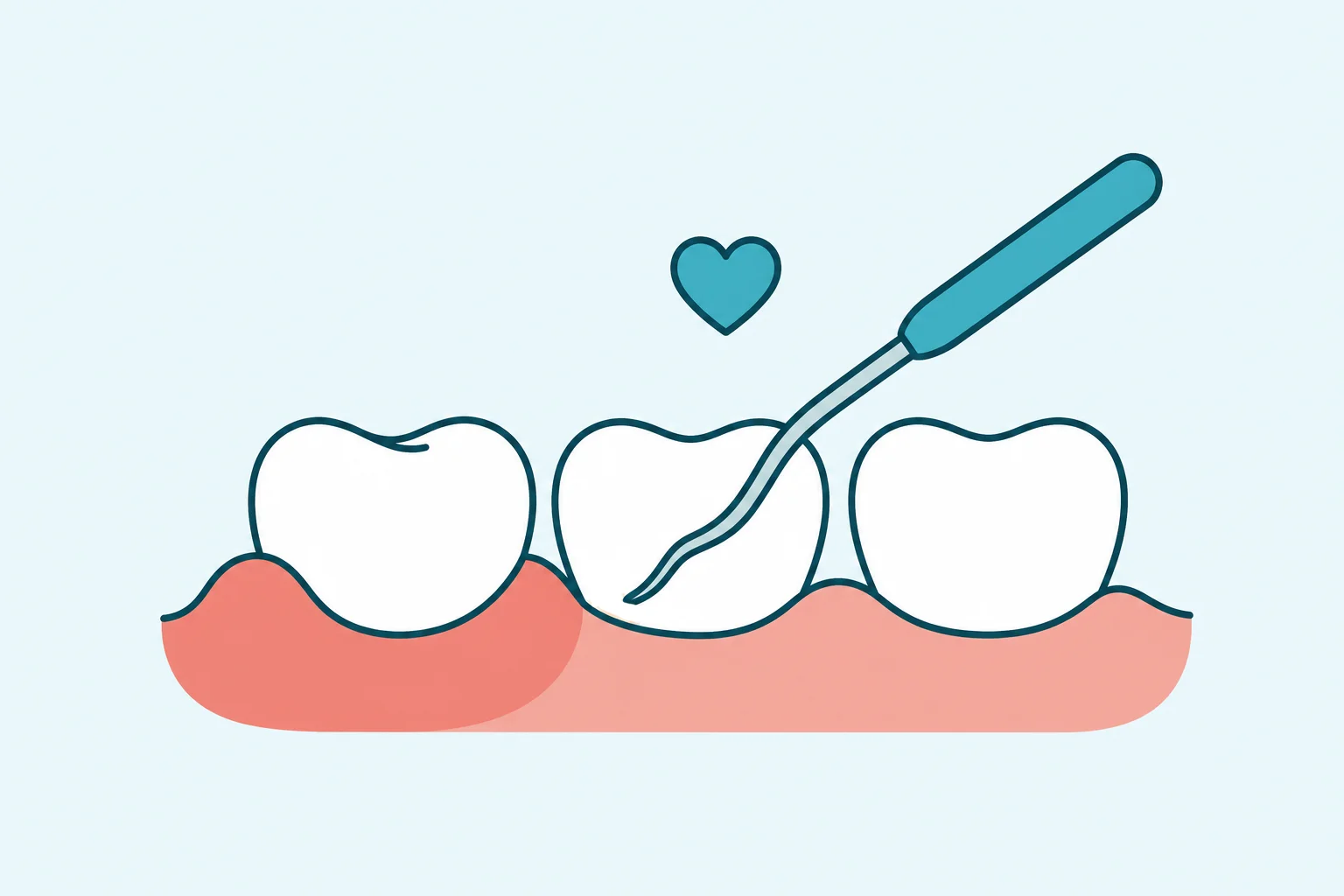
When gums need treatment, and when a good scaling is enough
Gum treatment is usually right when…
- Gums bleed regularly when brushing, or even on their own
- Gums look swollen, dark red, or have pulled away from the teeth
- Breath stays bad shortly after brushing
- A tooth has started to feel slightly loose or "different" when chewing
…but caught early, gums bounce back with much less
If bleeding is recent and deposits sit above the gum line, a standard scaling plus better home care often reverses everything within weeks; gingivitis is the fully curable stage of gum disease.
Compare: Scaling & Polishing →Bleeding that keeps returning deserves a proper gum assessment rather than repeated ordinary cleans. Measuring the pockets around each tooth tells us which stage we are really at.
Read about: Dental Check-up →Our promise: Your dentist will measure and show you exactly where your gums stand. If a simple scaling is all you need, that is all we will recommend.
What is gum treatment?
Gum treatment (sometimes called deep cleaning, or scaling and root planing) removes the bacterial deposits that have worked their way below the gum line, into pockets between gum and tooth. Ordinary brushing and even standard scaling cannot reach them there, and as long as they remain, the gum stays inflamed and slowly loses its grip on the tooth.
The treatment cleans those pockets and smooths the root surfaces so the gum can reattach, closing the space where bacteria lived.
Why gums deserve more attention than they get
Gum disease, not decay, is the leading reason adults lose otherwise healthy teeth, and it progresses almost silently. Bleeding is the early alarm; by the time teeth loosen, much of the supporting bone is already gone, and bone does not come back. The encouraging flip side: caught at the bleeding stage, gum disease is stopped with treatment this simple, and the earliest stage (gingivitis) is fully reversible.
At Happy Tooth Dental Clinic in Puchong, every check-up includes a look at your gums, because the cheapest gum treatment is the one that never becomes necessary.
Nothing unknown, nothing to fear
Mapping the gums
A fine probe gently measures the space between gum and tooth at several points. You feel light touches, and the numbers tell us where the trouble is.
Numbing where needed
Areas that need deeper cleaning are numbed first. Shallow areas often need nothing at all.
Cleaning below the gum line
The deposits hiding under the gums (the actual cause) are carefully removed. You feel pressure and fine scraping, not pain.
Smoothing the roots
Root surfaces are smoothed so gums can reattach snugly. Slow, deliberate work; a good time for headphones.
Will it hurt? With numbing, deep cleaning feels like pressure and vibration rather than pain. Gums may be tender for a day or two afterwards, the kind of tender that improves daily. If any spot stings during treatment, say so; topping up the anaesthetic takes seconds.
- DoEat once any numbness fades; softer food is kinder today
- DoTake a mild painkiller if gums feel bruised
- Don'tBe surprised by minor bleeding today; it stops as gums calm
- DoBrush gently but thoroughly; cleaning is now your half of the treatment
- DoRinse with warm salt water after meals
- Don'tAvoid the tender areas while brushing; plaque returning there undoes the work
- DoExpect gums to look pinker, tighter and bleed less week by week
- DoKeep the review appointment; we re-measure to confirm healing
- Don'tBe alarmed if teeth feel slightly more exposed: that is swelling going down, not gums being lost
Call us if: bleeding increases rather than settles, swelling appears, or any tooth feels looser. Gum healing should trend one direction; if it does not, we want to see you early.
Gums heal by tightening back around clean roots over 4–6 weeks. Some cold sensitivity near the gum line is common and fades. To be honest, gum disease is controlled rather than cured: the treatment resets the situation, and daily brushing plus regular maintenance keeps it that way.
What determines the fee
- How many areas need deep cleaning — a localised problem is quicker than a full-mouth treatment
- One visit or two — deeper cases are often treated half the mouth at a time, for comfort
- Maintenance interval afterwards — treated gums usually do best with 3–4 monthly cleans at first
No surprises — that's the rule
You will get the exact fee after examination, before any treatment starts.

“Nobody notices their gums until they bleed, and even then, most people wait. I wish they wouldn't. Gum treatment caught early is one of the most satisfying things I do: the change in a month is visible to the patient themselves.”
Dr. Ong Xin Min · Founder, Happy Tooth Dental
Frequently asked questions
Is bleeding when brushing really not normal?
Healthy gums do not bleed from ordinary brushing. Bleeding means the gum is inflamed; it is the single most reliable early sign, and the stage at which treatment is simplest.
What is the difference between this and ordinary scaling?
Scaling cleans above and just at the gum line. Gum treatment goes below it, into the pockets where deposits have collected, and smooths the roots so gums can reattach. It treats the disease, not just the surface.
Will my gums grow back after receding?
Receded gums do not regrow on their own, which is why acting at the bleeding stage, before recession, matters. Treatment stops the process and keeps what you have.
Why do I need cleans every 3–4 months afterwards?
The bacteria that cause gum disease repopulate pockets within about three months. Shorter maintenance intervals in the first year are what keep the result; most patients later graduate back to six-monthly visits.
Not sure what your tooth needs?
Book a consultation on WhatsApp — your dentist will examine first and explain your options honestly before anything is decided.
Book a consultation